
Rain in the UAE is rare, but when it comes it is heavy. In Dibba, the mountains push storm water down through the wadis fast, and a single night of rain can test every roof in town. The best time to find a weak spot is before the clouds arrive, not after the ceiling starts to drip.
Why villas in Dibba need waterproofing
Most villas here have flat concrete roofs designed for heat, not rain. Over the years, sun and temperature changes crack the screed, dry out sealants and lift the edges of old membranes. Water does not need a big hole: it finds hairline cracks, gaps around pipes and blocked drains.
Once water gets in, the damage is quiet but expensive: stained ceilings, peeling paint, mould, short circuits in light fittings and, worst of all, rusting steel inside the concrete slab. Fixing a roof membrane costs far less than repairing a slab.
When is the right time?
Plan your waterproofing for October and November. The worst of the summer heat has passed, so membranes and coatings cure properly, and the work is finished before the main rains, which usually fall between November and March. Leaving it until the first storm means working in a rush, on a wet roof, when every contractor is busy.
Your pre-rain checklist
- Roof surface: look for cracks, blisters or bubbles in the membrane, and areas where water stood after the last rain.
- Roof drains and downpipes: clear sand, dust and leaves. A blocked drain turns a roof into a pool.
- Parapets and joints: check the corners where the roof meets the walls, and the sealant around AC units, pipes and water tanks.
- Windows and doors: replace cracked or shrunken silicone around frames.
- Balconies and wet areas: check tile grout and floor slopes so water runs to the drain, not to the wall.
- Around the villa: make sure the ground slopes away from the walls and that boundary-wall drains are open.
Warning signs you should not ignore
Damp patches or brown rings on ceilings, paint that bubbles or peels, white salt marks on walls, a musty smell in upstairs rooms, or cracks that grow after rain. Any of these means water is already getting in, and the repair should be done before the next storm.
The systems we use
- Torch-applied bitumen membranes for roofs, with a protective screed or tiles on top.
- Liquid coatings (polyurethane or cementitious) for roofs with many pipes and corners, balconies and wet areas.
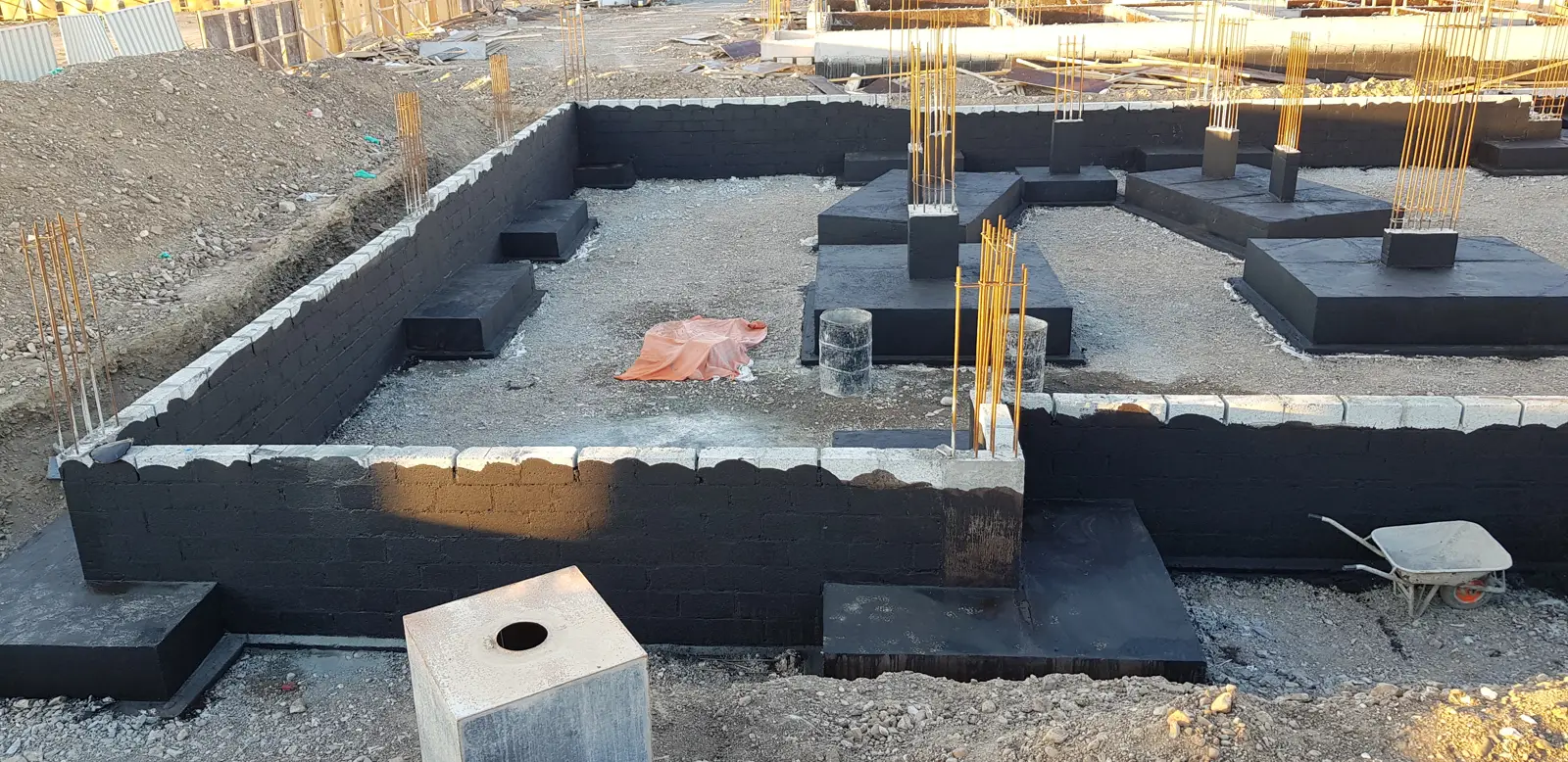
- Bitumen coating on foundations for new villas, to stop ground moisture rising into the walls.
You can see foundation waterproofing on one of our villas in the Omran Khameez Villa project.
Book a free roof inspection
We have been building and maintaining villas in Dibba since 1981. Send us a message and we will inspect your roof, show you what we find, and give you a clear quote, with no obligation. WhatsApp us on +971 50 374 5268 or see all our services.